Tracing Certification Timelines for Jackpot Engines and Their Ties to Withdrawal Verification Sequences in Portable Regulated Environments
Ellis Schmidt · Oct 16, 2026
Tracing Certification Timelines for Jackpot Engines and Their Ties to Withdrawal Verification Sequences in Portable Regulated Environments
Jackpot engines in regulated mobile gaming environments follow structured certification timelines that typically extend from initial design review through final approval, and these processes connect directly to withdrawal verification sequences that confirm payout eligibility before funds reach player accounts. Observers note that portable devices add layers of complexity because operators must demonstrate consistent performance across operating systems while maintaining compliance with jurisdiction-specific rules.
Understanding Jackpot Engine Certification Basics
Certification begins with software providers submitting jackpot engine code to accredited testing laboratories, where teams evaluate random number generation, progressive pooling mechanics, and payout trigger algorithms over periods that range from eight to sixteen weeks depending on the jurisdiction. Data from industry reports indicate that laboratories perform thousands of simulated spins during this phase, and any deviation in seed values or accumulation rates triggers additional review cycles that extend the overall timeline by another four to six weeks.
Key Stages in the Timeline
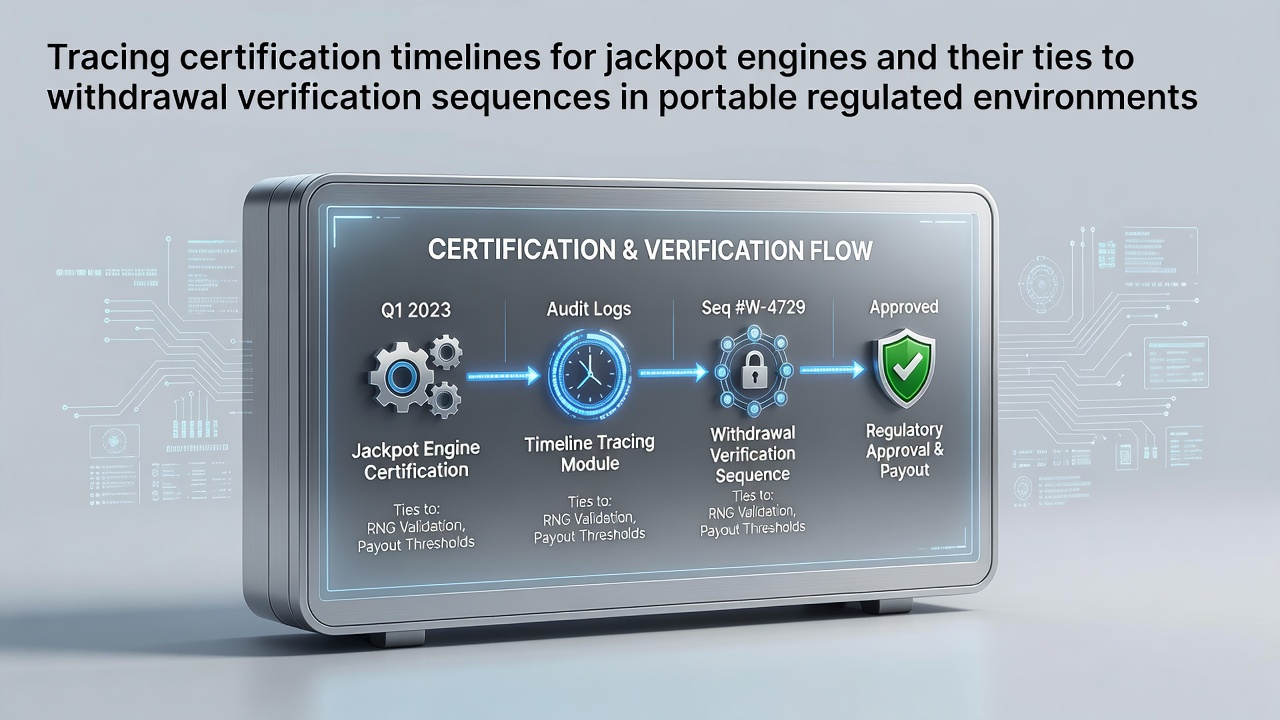
The first stage involves documentation submission and initial security audits, while the second stage focuses on live environment testing that replicates mobile network conditions such as variable latency and intermittent connectivity. Researchers have observed that certification bodies in multiple regions require operators to demonstrate failover mechanisms that preserve jackpot integrity during connection drops, and these demonstrations often occur in October when annual compliance updates take effect. The third stage covers final sign-off and integration with backend systems, after which the engine receives a unique certification identifier that links to all subsequent payout records.
Those who track regulatory filings note that timelines vary by region, with some authorities completing reviews faster when providers use previously approved modules, whereas entirely new jackpot architectures demand full retesting even if core components remain similar.
Connections Between Jackpot Certifications and Withdrawal Sequences
Withdrawal verification sequences rely on the same certification identifiers assigned during jackpot engine approval, which means that any payout exceeding a predefined threshold must reference the original certification record before processing can continue. Systems cross-check player account data against certified jackpot logs, and this step prevents discrepancies that could arise from unverified progressive contributions. Figures from regulatory summaries reveal that verification protocols typically complete within twenty-four to seventy-two hours when all certification data remain current, yet delays emerge when engine updates occur without corresponding re-certification filings.

Portable regulated environments introduce additional verification checkpoints because device-specific variables such as operating system version and geolocation data must align with the certified parameters established during testing. Experts have documented cases where a player initiates a withdrawal on one device type while the original jackpot win registered on another, prompting extra authentication layers that reference the certification timeline to confirm no tampering occurred during transfer.
Regulatory Frameworks Across Regions
Multiple regulatory bodies maintain distinct requirements that influence how certification timelines intersect with withdrawal processes. According to information published by the Responsible Gambling Council, Canadian provincial standards emphasize continuous monitoring of jackpot pools after initial certification, which creates ongoing data feeds that withdrawal systems query in real time. In contrast, Australian state regulators require periodic re-validation of jackpot engines every twelve months, and these re-validation results feed directly into the verification sequences used by mobile operators licensed in those jurisdictions.
Studies conducted by academic teams at institutions focused on gaming technology have shown that integration between certification databases and withdrawal platforms reduces error rates in payout calculations, particularly when mobile applications pull live certification status before authorizing large transfers. One analysis examined data from European operators and found that synchronized records shortened average verification times by approximately thirty percent compared with systems that relied on periodic manual checks.
Practical Implementation in Mobile Settings
Operators in portable regulated environments deploy application programming interfaces that query certification status automatically whenever a withdrawal request involves a jackpot component. These interfaces pull timestamps from the original certification documents and compare them against any subsequent engine modifications, flagging any gaps that would require fresh laboratory review. Data indicates that such automated checks operate continuously, and they help maintain compliance without extending player wait times beyond standard processing windows.
Case examples shared in industry conferences illustrate how a single unrecorded engine update in a mobile platform led to a temporary suspension of jackpot-related withdrawals until re-certification completed, highlighting the direct operational link between the two processes. Regulators in several jurisdictions now request quarterly reports that map certification events to withdrawal outcomes, providing visibility into whether timelines remain aligned with regulatory expectations.
Conclusion
Certification timelines for jackpot engines establish the foundational records that withdrawal verification sequences depend upon in portable regulated environments, and operators must maintain continuous alignment between these elements to meet compliance obligations across different regions. Ongoing monitoring, automated database queries, and periodic re-validation keep the processes synchronized while supporting secure mobile play.